
Exploring Dr. Hisatake Nojima’s 2005 Perspective:
Trace Minerals, Soil Health, and Modern Diseases – A Historical Japanese View

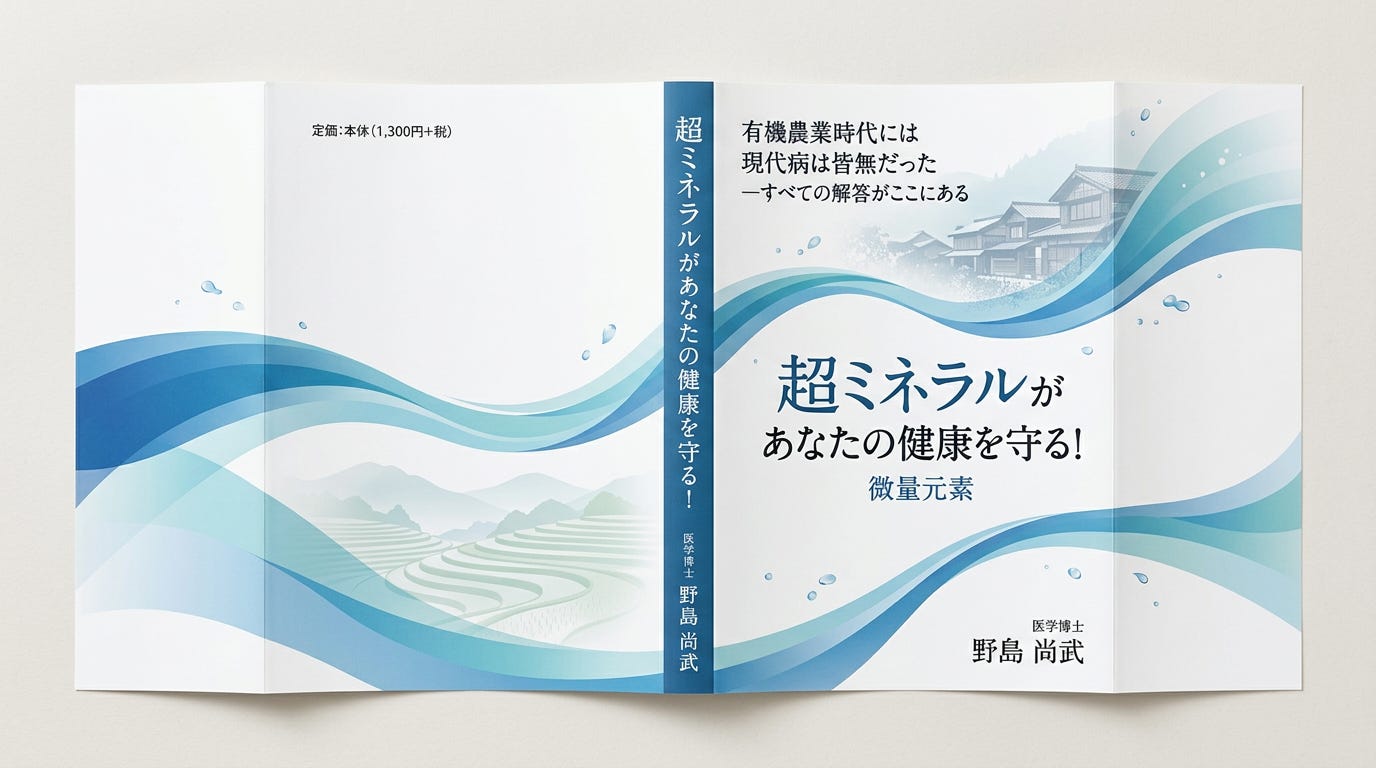
As many of you know, I am co-owner of Aurmina alongside Dr. Pierre Kory and Lisa Kory. Aurmina uses a base Themarox solution imported from Japan, drawing from longstanding Japanese traditions around mineral-based wellness.
Disclosure: As a co-owner, I have a financial interest in Aurmina. This post reflects on an out-of-print 2005 book by Japanese physician Dr. Hisatake Nojima, Super Minerals Protect Your Health!, based on a translated version made possible through generous patient efforts (details below).
Important upfront disclaimer: This is a neutral, educational summary of Dr. Nojima’s personal opinions, clinical anecdotes, and hypotheses from 2005. These are not supported by modern randomized controlled trials, have not been evaluated or approved by the FDA, and do not represent current medical, nutritional, or scientific consensus. Nothing here is medical advice, a health claim, an endorsement of any approach (including mineral solutions), or promotion of any product, including Aurmina. The book’s ideas—particularly on cancer and disease—are historical, provocative, and based on one clinician’s observations in his practice. They predate major advances in genomics, oncology, and evidence-based nutrition. Science has evolved significantly since 2005; always consult a qualified healthcare provider for personal health matters.
A heartfelt thank-you: A patient from the Leading Edge Clinic and his family kindly tracked down five of Dr. Nojima’s out-of-print books and funded their full English translation. Copyright restrictions prevent sharing complete PDFs, so we’re limited to summaries like this. Many readers might find value in the full texts to explore these concepts further—we’re investigating compliant ways to potentially publish or share the translations (e.g., via permissions or proper channels). Our sincere gratitude to this patient and family for their commitment to broadening access to the insights of one of Japan’s most innovative and forward-thinking medical voices.
Dr. Nojima’s Background and Driving Motivation
Dr. Hisatake Nojima, a Doctor of Medical Science, trained at Nagasaki University School of Medicine and held roles including Assistant Professor at Kagoshima University, U.S.-based research, and directing public health centers in Chiba. By 2005, after over 13 years working with trace minerals, he ran Nojima Clinic, dedicating himself to “Super Mineral therapy” for conditions he linked to modern lifestyles—cancer, diabetes, atopic dermatitis, hay fever, and more. He observed these “modern day diseases” as rare in developing nations or pre-industrial eras, blaming industrial agriculture’s shift from organic to inorganic methods (chemical fertilizers/pesticides depleting soil minerals). He criticized huge investments in pharmaceuticals and early gene therapy as overlooking basics, echoing the Japanese adage that “medicine and food share the same origin.” In his view, correcting dietary mineral imbalances could address root causes simply, without costly interventions.
Core Thesis: Trace Elements as Life’s Fundamental Catalysts
Dr. Nojima portrayed trace elements (minute minerals like tungsten, titanium, vanadium, plus 40+ others) as essential catalysts for all life processes. He explained how primordial life emerged via minerals in rocks catalyzing organic matter from ancient atmospheres, with seawater’s mineral profile mirroring human blood composition (e.g., high chlorine/sodium). As life evolved, animals shifted from direct seawater absorption to plant-based intake—but modern inorganic farming, he argued, stripped soils of these elements, creating “mineral malnutrition” in advanced societies.He detailed minerals’ roles: activating enzymes (magnesium for ~300, zinc for ~250), enabling vitamins to function (e.g., vitamin E needing calcium, selenium, zinc), and partnering with genes for proper protein synthesis. Deficiencies, he hypothesized, disrupt metabolism, leading to abnormalities. He introduced “Super Mineral Water”—ionized, water-soluble minerals from natural ore—as a practical, low-cost, side-effect-free replenishment method, emphasizing synergy among elements rather than isolated supplements.
Chapter Breakdowns with Deeper Insights
Chapters 1-3: Deficiency as the Root of Modern Diseases
Dr. Nojima tied widespread issues to soil depletion: citing 1950s-2000s Japanese food tables showing spinach losing ~50% vitamin A, ~25% vitamin C, and ~83% iron; apples nearly all iron. He warned of “sub-healthy” states from deficiencies, exacerbated by stress or alcohol. He advocated agricultural fixes—ionizing trace elements into fertilizers, reviving organic practices with waste recycling (”mottainai”)—while suggesting individuals use mineral solutions interim. He stressed building resilient bodies for faster recovery and reduced drug reliance, cautioning against “drug-related harm” like immune damage from treatments.
Chapters 4-5: Minerals’ Hypothesized Role in Cancer and Diseases
He posited deficiencies facilitate “cancer gene” expression, while balance suppresses it and eases side effects (some minerals pharma-approved). Challenging reactive oxygen species as primary culprits, he claimed Super Mineral Water activated immunity across cancer stages in his observations, aiding skincare/weight without side effects—based on thousands of clinic cases.
Chapters 6-8: Guidelines, Mechanisms, and Cancer Assertions
He outlined Super Mineral Water protocols for cancer (stage-specific dosing) and cardiovascular conditions, focusing on non-invasive self-healing. Cancer wasn’t “incurable,” he asserted—if mineral roots corrected. He hypothesized mechanisms like metabolic restoration preventing recurrence, sharing anecdotes of symptom disappearance, tumor resolution without surgery/suffering. He referenced large patient volumes (implying thousands, up to 10,000 in broader context), claiming complete recoveries in some.
Chapter 9: Patient Memoirs
Closing with 2005-2006 magazine stories from his patients, illustrating reported experiences under therapy. These excerpts capture Dr. Nojima’s optimism and critique—he admitted his “one simple solution” idea conflicted with modern pharmacology’s complexity.
Reflections on a Thought-Provoking Historical Work
This 2005 book offers a lens into alternative Japanese thinking on nutrition, soil vitality, and prevention—relevant amid regenerative farming talks. Yet its claims remain anecdotal, unverified by today’s rigorous standards (e.g., RCTs, peer-reviewed meta-analyses).
What aspects intrigue you most? Thoughts on minerals/soil health?
Comment below!
Stay thoughtful and well,
Scott Marsland, FNP-C
@RhusToxidendron on X
P.S. Aurmina draws from Japanese mineral traditions, but this post makes no claims about its benefits or connection to Dr. Nojima’s views. Presented purely for historical/educational interest—verify with current peer-reviewed sources.
Come for the science, stay for the stories.
Part 2 of My Vietnam (“Hung Lam”) is now live in the Personal Insights section—a shy summer crush on a Vietnamese refugee classmate in 1988 Philadelphia.
Toggle Personal Insights on in your account settings if you’d like to read this and future installments in the series.
We purchased Aurmina when Dr. K first wrote about it and have been treating our city water with it for a few months now. We love the water. I am grossed out by the "floc" but I just decant the clear water into our Alexapure gravity water filter and drink away. Our pets love the treated water too...and you might think we are crazy but we think the water cured our cat's chronic watery eye. Haha!! (In January I downloaded this book: Mineral deficiency and illnesses!
By Hisatake Nojima, M.D...very good read!)
Where can you find account settings in order to toggle the insights? I find navigating substack to be difficult. Also, thanks so much to the patient obtaining the books and the translation. I was hoping to be able to find them and read them.